Misfit Garden: From a Trestle Table to the Whole Country
So, What Is Misfit Garden?
It happens on farms and orchards all over the country: perfectly good fruit and veg getting tipped in a bin, not because there’s anything wrong with it, but simply because it’s not good enough size or shape for a supermarket shelf. A carrot with two legs, a capsicum with a dimple, a tomato that ripened a day early; none of it matters to your taste buds, but it’s often enough for a whole crop to get turned away, leaving growers out of pocket and good food headed for landfill.
Misfit Garden exists to catch that produce before it becomes waste, buying directly from growers who’d otherwise have nowhere to send it and getting it straight to kitchens and doorsteps around the country. Every box means a fairer deal for the farmer, less food in landfill, and more support staying local. Here’s how two women with no produce experience built that from a trestle table into a nationwide business.
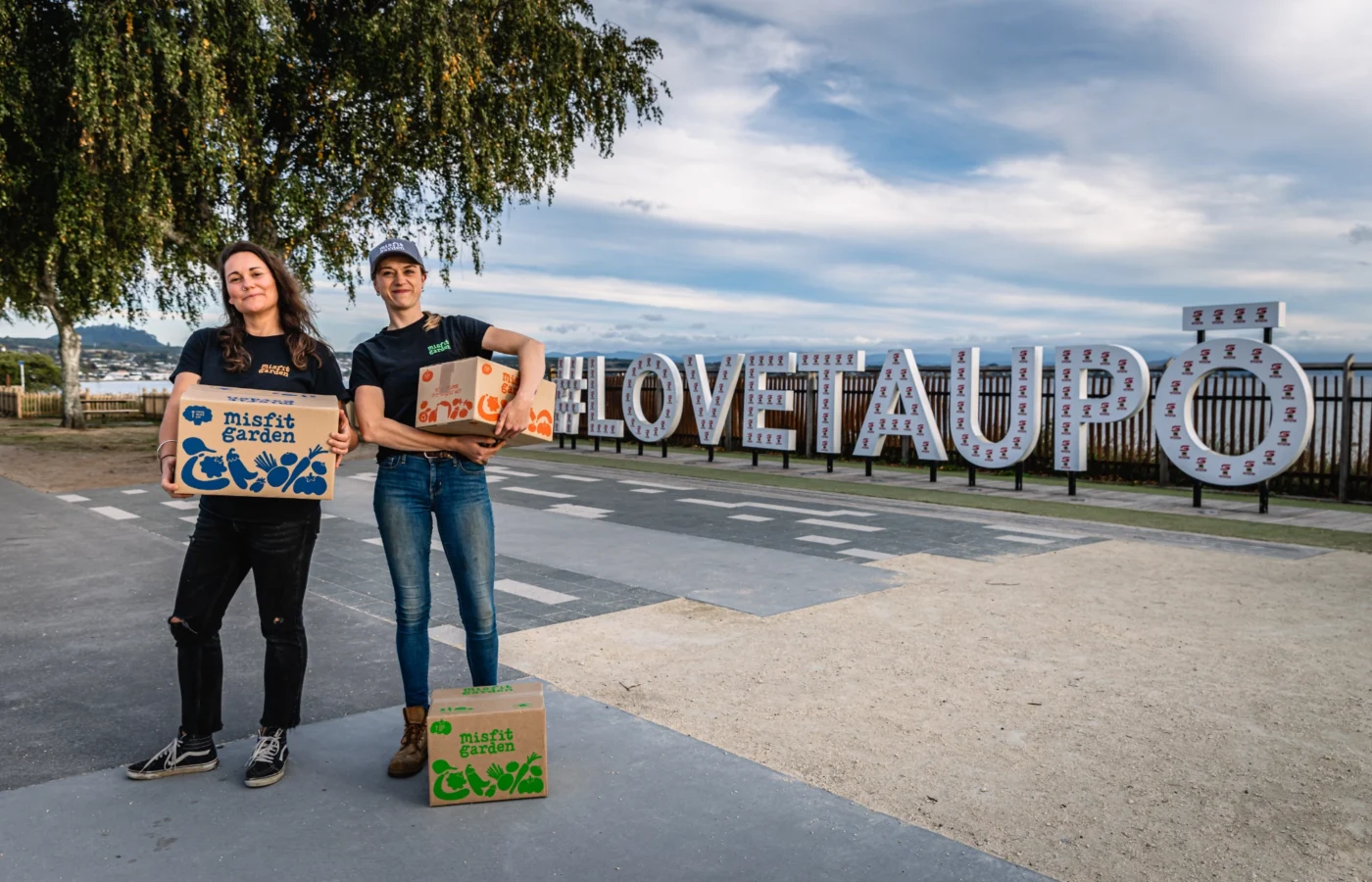
Before Misfit Garden, Jen and Sofia both worked at the same luxury lodge here in Taupō; Jen as a horse riding instructor and guide, Sofia as a chef. Neither had run a produce business before, but one question kept nagging at them: where does all the ugly looking fruit and veg actually go?
“I think there was news articles talking about how much food was being wasted,” Jen told me. Restaurants were shut for COVID, growers were sitting on stock with nowhere to send it. Then lockdown made them both redundant, pushing them to finally chase the idea. Sofia grew up in South America, where veg is bought off street vendors and nothing has the perfect shape. Here, supermarket fruit is all identical, symmetrical rows. So where was everything misshapen going?
Chickens, Eggs and Five Hundred Kilos of Mandarins
Farmers kept telling them there was no waste, nothing going spare. Until one called back. “I remember speaking to a mandarin farmer, he was like no, no, nothing, and then two weeks later he called back and was like, actually I’ve got a whole crop that’s too small for the market, would you guys buy them?” Five hundred kilos, and zero customers to sell it to. Chicken, meet egg.
The first real sale was smaller: a Hamilton grower with baby beetroot meant for fine dining kitchens, sold from a single trestle table at the Sunday market. “We just sold beetroot, odd shaped red and stripey beetroot.” It was a hard sell. Whatever didn’t move went into a little bar fridge, and after market they’d load up the van and drive round town knocking on restaurant back doors, cash only.
The Scary Bit Wasn’t What You’d Think
I asked what the scariest part was, half expecting money or failure. But it wasn’t; they’d both kept their day jobs while getting Misfit off the ground, so their bills were sorted regardless. “We never had a definite plan. We were winging it every single day.”
The fear came later, with their first commercial lease. “That was terrifying, because could we afford this.” They took a leap and signed anyway. Sales jumped 20% almost straight away, just from having somewhere to hold volume. Hiring someone to help had the same jump in sales.
Doubt, Stubbornness, and Learning to Stop Comparing
A really good week was often wiped out by one bad email. “Every negative feedback literally felt personal, like they were telling us we were ugly. It was soul destroying.” What carried them through was having each other, and a stubborn streak they’re both happy to admit to.
Even harder was watching a rival copy the concept and launch a year later with more backing. “For the first year or two, it was just a dagger.” But the pressure sharpened their skills. “Competition is good. It really pushed us to do even better.” The biggest shift was letting go of comparing themselves at all. “The moment we stopped doing that, our focus felt better.”
Bouncy Castles, Believe It or Not
For two years, alongside building Misfit, Jen and Sofia also ran a bouncy castle hire company: nine castles delivered on weekends, then Mondays starting the vegetable week over again. They’ve since sold it to a local family who’ve grown it to about twenty castles. Not what you’d expect from a produce business, but it says plenty about how hard they worked to stay afloat.
The Ones Who’ve Stuck Around
Customers who came to that first market stall, bags in hand, still faithfully order from them every week. “They could be buying their vegetables anywhere else, but they loyally stick with us.” Then there are the farmers, proper friends now after years of working the seasons together. Kevin grows avocados in Katikati and brings them wild duck and lamb in the off season, purely because an order turned into a friendship. And there are the tomatoes, from T & G’s geothermal hot house in Reporoa, powered in part by food waste itself.
Being based here isn’t free of headaches, mostly the freight and courier depots never built for this kind of volume. But they’ve worked it out, right down to colour coding every box. The trade-off: lower overheads, and a spot smack in the middle of the country that’s handy for reaching everyone.
What They Wish People Understood
“It’s kind of incomprehensible how much food is wasted,” on farms from bad weather or cancelled orders, and at home simply because people don’t know how to store or cook something that looks a bit different. One comment that stuck with me: “A packet of biscuits is three dollars, and a cauliflower is three dollars. But there’s so much more energy and effort that goes into producing the cauliflower.” Jen reckons vegetables should cost more than they do; although we’re all very glad they don’t.
Advice for Anyone Starting a Business
So don’t wait for things to be perfect. “Just go to the market on a Sunday with a table and start selling,” was the advice they were given early on, and it’s what they tell people now too. “Don’t try and do it all at once, like the website and stuff. Just do it.” And don’t give up. “There’s always so many reasons why you shouldn’t do it, but if you dare, the reward at the end is massive, and the joy in having done it yourself is amazing.”
These days Misfit Garden delivers across both islands, supplies around thirty restaurants and cafes in Taupō, and has just launched into the South Island, with dry goods next.
What It’s Taught Them
I like to end these chats with the same question: what’s one thing this has taught you that you didn’t expect to learn? For Jen and Sofia, it came back to how differently everyone is wired.
“Everyone’s got a skill. It’s about figuring out their individual skills and using them to the best of their ability. You can’t make one person do something they’re not meant to do. Every human is unique.” They learnt early to own up to what they weren’t good at rather than push through it. Jen admits, “I’m terrible at packing boxes, when I did it I’d miss stuff all the time.” So they split the work up, each doing what came naturally, the simple philosophy their whole team runs on.
How You Can Support Them
The easiest way is ordering a box, weekly or fortnightly, delivered straight to your door with whatever’s in season and slightly too misshaped for the supermarket. Every box means less food in landfill, a better deal for the farmer, and a reason for good produce not to go to waste just because it didn’t look right. Keep an eye on the Taupō Facebook page too; they’ll set up a little pop-up shop whenever there’s extra produce to sell. And if you know a farmer with produce nobody wants, that’s exactly the kind of call Jen and Sofia are still happy to get.